
Yoga Techniques That Help Improve Sleep Quality
Sleep plays a vital role in restoring physical energy, supporting brain function, and maintaining emotional balance. However, modern lifestyles often interfere with natural sleep patterns. Yoga offers a gentle and effective way to prepare the body and mind for restful sleep by reducing tension, calming the nervous system, and regulating breathing.
Regular practice of selected yoga techniques before bedtime can improve sleep onset, reduce nighttime awakenings, and enhance overall sleep quality without relying on medication.
How Yoga Supports Better Sleep Naturally
Yoga influences sleep by activating the parasympathetic nervous system, which encourages relaxation and recovery. It also helps release muscular tension built during the day and reduces mental overactivity that interferes with falling asleep.
Key benefits include:
- Reduced stress and anxiety levels
- Slower breathing and heart rate
- Relaxed muscles and joints
- Improved hormone balance related to sleep cycles
- Enhanced mental calmness before bedtime
Practicing even ten to fifteen minutes daily can create noticeable improvements over time.
Legs Up the Wall Pose for Nervous System Relaxation
This restorative pose supports circulation and helps calm the body after a busy day.
How to Practice
Follow these steps:
- Sit sideways next to a wall
- Gently lie down while extending your legs upward against the wall
- Keep your arms relaxed beside your body
- Close your eyes and breathe slowly
- Remain in this position for five to ten minutes
Benefits
Regular practice may help:
- Reduce swelling in the legs and feet
- Relieve lower back discomfort
- Calm mental restlessness
- Support deeper relaxation before sleep
Child’s Pose for Releasing Physical Tension
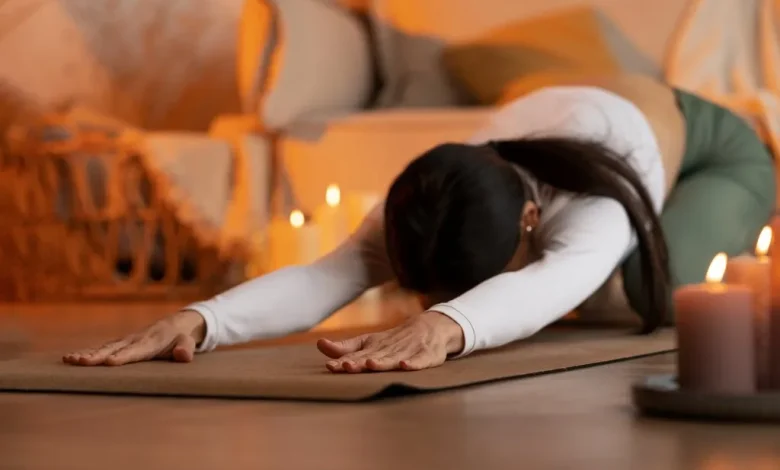
Child’s Pose gently stretches the back, shoulders, and hips while encouraging slow breathing.
How to Practice
Try this method:
- Kneel comfortably on the floor
- Lower your torso forward toward the ground
- Extend your arms forward or keep them beside your body
- Rest your forehead on the floor or cushion
- Breathe slowly and deeply
Benefits
This pose can:
- Relax spinal muscles
- Reduce shoulder tension
- Calm the nervous system
- Prepare the body for restful sleep
Supine Twist for Digestive Comfort and Relaxation
Gentle twisting movements release tension stored in the spine and abdomen, which supports comfort during sleep.
How to Practice
Follow these steps:
- Lie on your back with knees bent
- Lower both knees slowly to one side
- Turn your head in the opposite direction
- Keep shoulders relaxed on the floor
- Hold for several breaths before switching sides
Benefits
This pose may support:
- Improved spinal flexibility
- Reduced lower back stiffness
- Relaxed abdominal muscles
- Better breathing rhythm before bedtime
Forward Fold for Mental Quietness
Forward folding movements help reduce stimulation and encourage inward focus.
How to Practice
Use this approach:
- Sit with legs extended forward
- Slowly bend from the hips
- Reach toward your legs or ankles
- Keep your neck relaxed
- Maintain steady breathing
Benefits
Regular practice helps:
- Release tension from the back body
- Calm mental activity
- Improve circulation
- Support deeper relaxation
Guided Yogic Breathing for Sleep Preparation
Slow breathing techniques enhance the calming effects of physical poses.
Simple Breathing Practice Before Bedtime
Follow these steps:
- Sit or lie comfortably
- Inhale slowly through your nose
- Allow your abdomen to expand naturally
- Exhale gently and completely
- Continue for five to ten minutes
Benefits
This breathing technique can:
- Slow heart rate naturally
- Reduce nighttime anxiety
- Improve oxygen circulation
- Promote faster sleep onset
Yoga Nidra for Deep Mental Relaxation
Yoga Nidra is a guided relaxation technique practiced while lying down. It helps the body enter a state between wakefulness and sleep where deep restoration occurs.
How to Practice
Try the following:
- Lie comfortably on your back
- Close your eyes
- Focus attention on different body parts gradually
- Maintain slow breathing
- Allow your body to relax completely
Benefits
Yoga Nidra may help:
- Reduce insomnia symptoms
- Improve emotional balance
- Support nervous system recovery
- Enhance overall sleep depth
Creating a Simple Nighttime Yoga Routine
A short and consistent routine improves effectiveness.
Consider this sequence:
- Begin with gentle breathing for three minutes
- Practice Child’s Pose
- Move into Supine Twist
- Finish with Legs Up the Wall Pose
- End with Yoga Nidra relaxation
Practicing this routine regularly encourages the body to associate yoga with sleep readiness.
Tips for Practicing Yoga Safely Before Sleep
Following simple precautions ensures better results.
Keep these points in mind:
- Practice in a quiet environment
- Avoid stimulating poses before bedtime
- Wear comfortable clothing
- Keep movements slow and controlled
- Maintain regular timing each night
Consistency strengthens the connection between yoga practice and improved sleep patterns.
Frequently Asked Questions
How long should I practice yoga before bedtime to improve sleep quality
Practicing for fifteen to twenty minutes before sleep is usually enough to support relaxation and prepare the body for rest.
Can yoga help people who wake up frequently during the night
Regular evening yoga practice may reduce nighttime awakenings by calming the nervous system and reducing physical tension.
Is it safe to practice yoga in bed instead of on the floor
Some gentle breathing exercises and relaxation techniques can be practiced in bed, but stretching poses are safer on a stable surface like a yoga mat.
Does yoga improve sleep for people with busy schedules
Short routines of ten minutes can still produce meaningful improvements when practiced consistently.
Can yoga reduce dependence on sleep medications
In some cases, regular yoga practice supports natural sleep improvement and may reduce reliance on medication under medical guidance.
Are evening yoga sessions better than morning sessions for sleep improvement
Evening practice is generally more effective for sleep because it helps the body transition into a relaxed nighttime state.
How soon can improvements in sleep quality be noticed after starting yoga
Some individuals notice relaxation benefits within a few days, while consistent improvements in sleep patterns typically develop over several weeks of regular practice.