

Creating a Family-Centered Care Plan From Birth Through Early Childhood
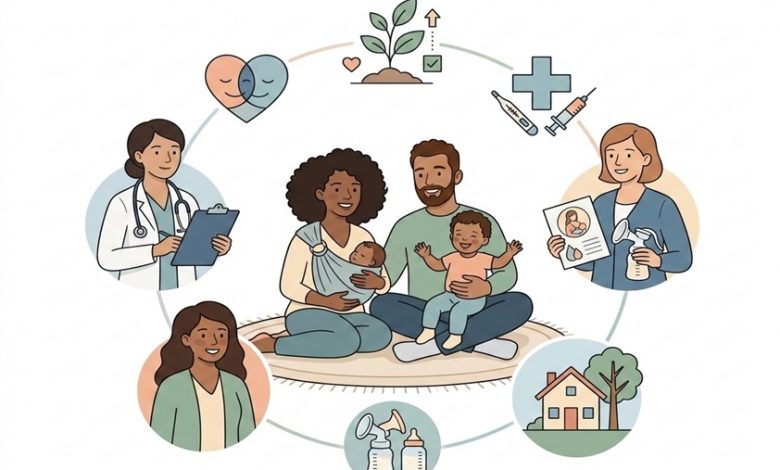
Building a Support System for the Early Years
From birth through early childhood, a child’s needs can change quickly. Feeding routines shift, sleep patterns evolve, new developmental skills appear, and parents make ongoing decisions about healthcare, childcare, behavior, and emotional well-being.
Trying to handle each concern only when it becomes urgent can feel overwhelming. A family-centered care plan gives parents a more organized way to prepare for changing needs while keeping the child and family at the center of care.
This type of plan may include lactation support, pediatric or family medicine, developmental services, mental health resources, and community programs. It isn’t meant to create a rigid roadmap for childhood. Instead, it helps families build a flexible network of professionals and resources they can turn to as needs change.
Start With Your Family’s Goals and Needs
A useful care plan should reflect the family’s circumstances rather than follow a one-size-fits-all checklist. Parents may have different feeding goals, medical histories, work schedules, cultural practices, financial considerations, and levels of support from relatives or friends. Children may also have health or developmental needs that call for closer monitoring or specialized care.
During pregnancy or shortly after birth, families can identify a few early priorities, such as:
- Establishing a feeding plan
- Choosing a primary healthcare provider
- Understanding routine preventive care
- Tracking development
- Knowing where to seek help for emotional or behavioral concerns
Writing these priorities down can make conversations with healthcare professionals more focused and productive.
The plan should change as the child grows. What matters during the first month may look very different at six months, two years, or the start of preschool. Reviewing the plan from time to time helps families adjust support without treating every change as a problem.
Create a Feeding and Lactation Support Plan
Infant feeding is often one of the first areas where families benefit from coordinated support. Parents who breastfeed or provide human milk may have questions about positioning, painful feeding, milk supply, pumping, returning to work, or whether their baby is getting enough milk.
A lactation consultant or breastfeeding support professional can review feeding patterns and suggest practical strategies based on the needs of both parent and baby. Families with premature or medically complex newborns may need additional help, especially when direct breastfeeding is delayed, or pumping becomes part of care in the neonatal intensive care unit.
Resources such as https://corporatelactation.com offer lactation consulting, breastfeeding support, and NICU-related services that families may choose to include in a broader feeding plan. Feeding support is most useful when it connects with the baby’s medical care. Lactation professionals and healthcare providers may look at different parts of the same concern, including weight gain, hydration, milk transfer, parental comfort, and medical conditions that affect feeding.
When providers share relevant information, families are less likely to receive conflicting recommendations.
Make Preventive Healthcare a Consistent Part of the Plan
After leaving the hospital or birth setting, routine medical care becomes one of the main anchors of a child’s care plan. Regular visits allow healthcare providers to monitor growth, discuss feeding and sleep, review developmental progress, provide recommended immunizations, and address illnesses or injuries.
These appointments also give parents a chance to bring up smaller concerns before they become more disruptive. Questions about constipation, skin changes, allergies, movement, language development, sleep, or family health history can often be discussed during routine visits.
Keeping a short note on a phone or in a notebook between appointments can make it easier to remember patterns, questions, or changes worth mentioning. Continuity matters too. When a healthcare team knows the child and family over time, providers have more context when something changes.
Families can support that continuity by keeping an updated record of medications, allergies, specialists, therapies, hospitalizations, and important developmental information.
Connect a Child’s Care With the Health of the Whole Family
A young child’s health doesn’t exist separately from the well-being of parents and caregivers. A caregiver’s physical health, sleep, stress, and access to medical care can all affect daily family life. Some families find it helpful to use a healthcare model that considers the needs of several household members rather than treating each person in isolation.
Family medicine providers can support preventive care across different stages of life while helping families understand how personal and family medical histories may affect a child’s care. Kimball Health Services, for example, provides family medicine and preventive healthcare services that may fit into a family’s broader approach to ongoing health management.
Families can also ask their primary provider how referrals work when specialized care is needed. Knowing the process ahead of time can make it easier to find a pediatric specialist, therapist, nutrition professional, or other clinician if the need arises. A clear referral pathway can make an unfamiliar healthcare system easier to navigate during an already stressful time.
Monitor Development Without Treating Milestones as Deadlines
Developmental milestones are useful reference points, but they aren’t strict deadlines. Children develop at different rates, and progress may happen unevenly across communication, movement, learning, social interaction, and self-care skills.
Parents can watch development through everyday activities. Changes in eye contact, gestures, play, movement, language, attention, social engagement, and responses to the environment can all offer useful information. If a caregiver notices an ongoing concern or a loss of a skill the child previously had, it’s worth discussing with an appropriate healthcare professional.
An evaluation doesn’t automatically mean a child will need long-term treatment. It may confirm that development is progressing as expected, identify an area to monitor, or show that targeted support could help build specific skills.
Add Developmental Services When Extra Support Is Needed
Some children benefit from specialized developmental services during the toddler or preschool years. Support may focus on communication, learning, sensory processing, movement, social interaction, daily living skills, or behavior. The right approach depends on the child’s individual strengths and needs.
Families referred for behavioral or developmental intervention may come across services such as applied behavior analysis, commonly called ABA therapy. Sunshine Advantage provides ABA therapy for children and developmental support. Families considering this or any other developmental service can ask how goals are set, how progress is measured, how caregivers participate, and how the program communicates with medical providers, schools, or other therapists.
Caregiver involvement matters because children spend much more time at home, school, and in the community than they do in therapy sessions. When professionals explain strategies clearly, parents can decide which approaches fit naturally into daily routines. Coordination between therapy, family life, and educational settings may also give children more opportunities to practice new skills in familiar situations.
Include Emotional Health in the Family Care Plan
Emotional wellness deserves the same attention as physical health and development. The transition to parenthood can bring sleep deprivation, relationship changes, financial stress, uncertainty, and major shifts in identity. Some parents may also experience postpartum depression, anxiety, grief, or other emotional challenges that affect daily life.
Young children are developing emotional and behavioral skills at the same time. Toddlers and preschoolers are learning how to manage frustration, communicate needs, handle transitions, interact with others, and recover from strong emotions. Tantrums, separation concerns, fears, and behavioral changes can be part of typical development. Families may want additional guidance when these patterns are persistent, intense, or interfere with everyday routines.
A strong family care plan includes knowing who to contact when concerns come up. That might be a primary healthcare provider, counselor, psychologist, school professional, or community program. Families don’t need to wait for a crisis before bringing up stress, behavior, or emotional well-being.
Know When Behavioral or Psychological Support May Help
Behavior can communicate needs that a young child doesn’t yet have the words to explain. Changes in mood, sleep, eating, social interaction, school participation, or behavior may be connected to stress, developmental differences, changes at home, or emotional difficulties.
Looking at the full pattern is often more helpful than focusing only on stopping one behavior. Behavioral and emotional health professionals can help families understand what may be contributing to those patterns and develop strategies that match the child’s developmental level.
Alliance Psychology provides behavioral and emotional support for children and families and is one example of a resource families may include in a coordinated care network when additional psychological or behavioral support is needed. Before beginning services, parents can ask how caregivers will be involved, what type of assessment is used, how goals are created, and how progress will be communicated.
When appropriate, communication among mental health professionals, medical providers, therapists, and educators can give families a clearer picture of the child’s needs while reducing conflicting or duplicated recommendations.
Keep Communication Organized Across Providers
As a child grows, a family may work with several professionals, each focused on a different part of the child’s health or development. Parents often become the main connection between those services, so having a simple system for organizing information can make care easier to manage.
A digital or paper record might include:
- Medical information
- Developmental evaluations
- Therapy recommendations
- Medication lists
- Feeding notes
- School documents
- Questions for upcoming appointments
- Provider names and contact information
Short, current summaries are often more useful than keeping every detail. Families can also ask providers when communication with other professionals would be helpful and what consent is required before records or information are shared.
When everyone has the information they need, coordinated care can reduce repetition and help each provider understand what the rest of the care team is addressing.
Build a Care Plan That Grows With Your Family
A family-centered care plan isn’t something parents complete once and follow unchanged for years. It’s a flexible framework that helps families identify resources, raise concerns, and respond as a child’s needs change.
Feeding may be the main focus during the newborn period. Later, preventive healthcare, development, behavior, school readiness, or emotional well-being may become more important.
Reviewing the plan periodically helps parents see what’s working, what’s no longer needed, and where more support could help. The strongest care plans reflect the family’s priorities while encouraging clear communication among the professionals involved in the child’s care.
By connecting feeding, physical health, development, and emotional well-being, families can build a reliable support system for the early years. Parenting will always come with questions, but knowing where to turn can make those questions easier to address as a child grows.